University of the Streets Café | Montréal, QC
In 2019, I had the opportunity to be a featured speaker at the event titled "How Can Art Meaningfully Contribute to the Social Justice Struggle," which was part of the University of the Streets Cafe series. This event offered a relaxed environment for individuals from diverse backgrounds to attend, ask questions, and engage in discussions with three selected speakers. Salima, Johnny, and I sat scattered in the crowd and had a beautiful conversation, drawing on our various experiences navigating social justice through art.
I was so nervous at the time that I had taken a long break from public speaking since leaving SCYAP in 2016. I was so poor at the time that I regularly waited hours in lines at the school free lunch to make sure I could eat without going over the very tight budget I was living on. I would occasionally find myself feeling really out of place at the University, surrounded by people who had money to go out and do things, money for their projects, and support from their parents. I was working 2 jobs this year, and I worked my butt off all summer to ensure I could pay rent, buy supplies and food. I used a food stamps card to buy mall sushi at a little food court on campus, and it felt like a momentous occasion
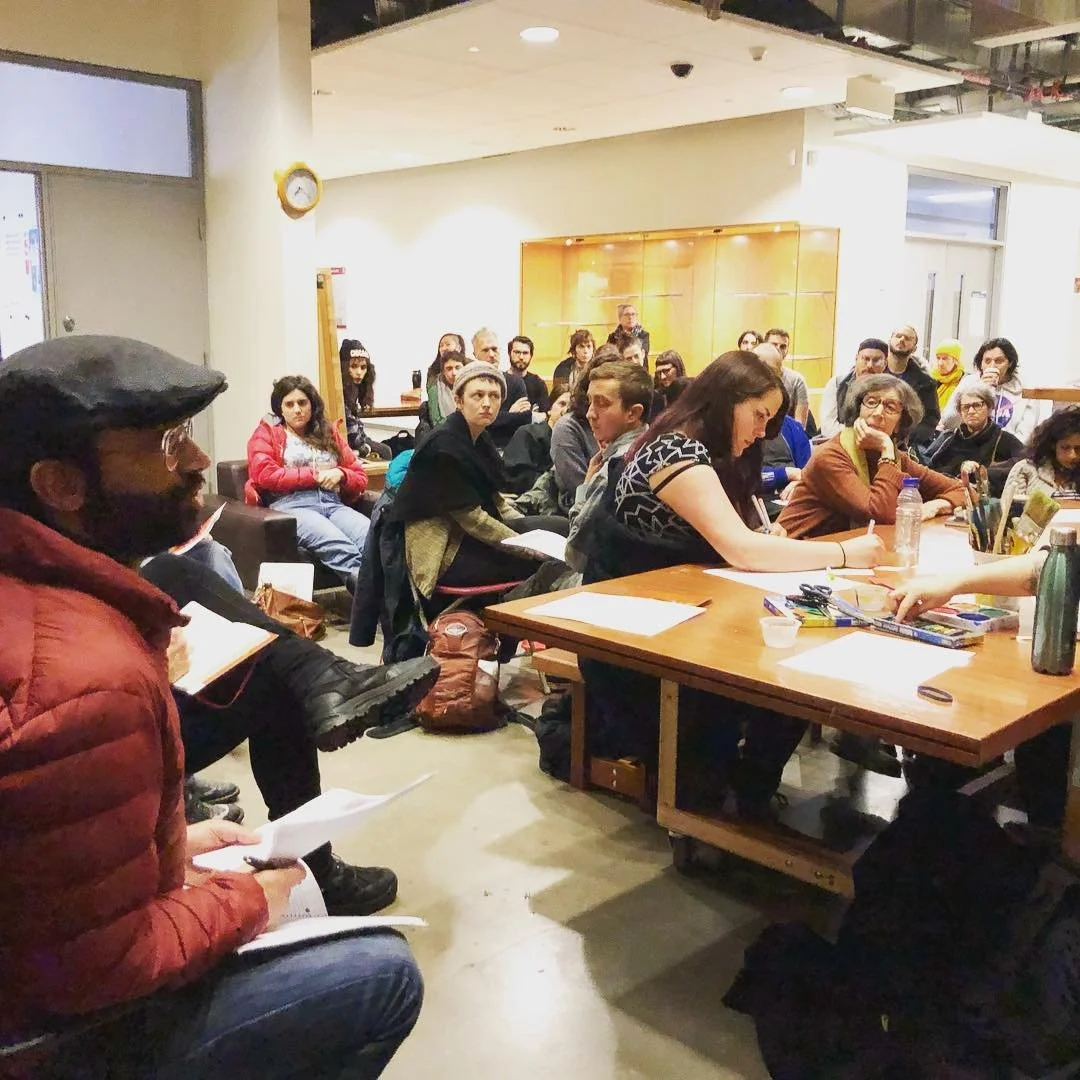
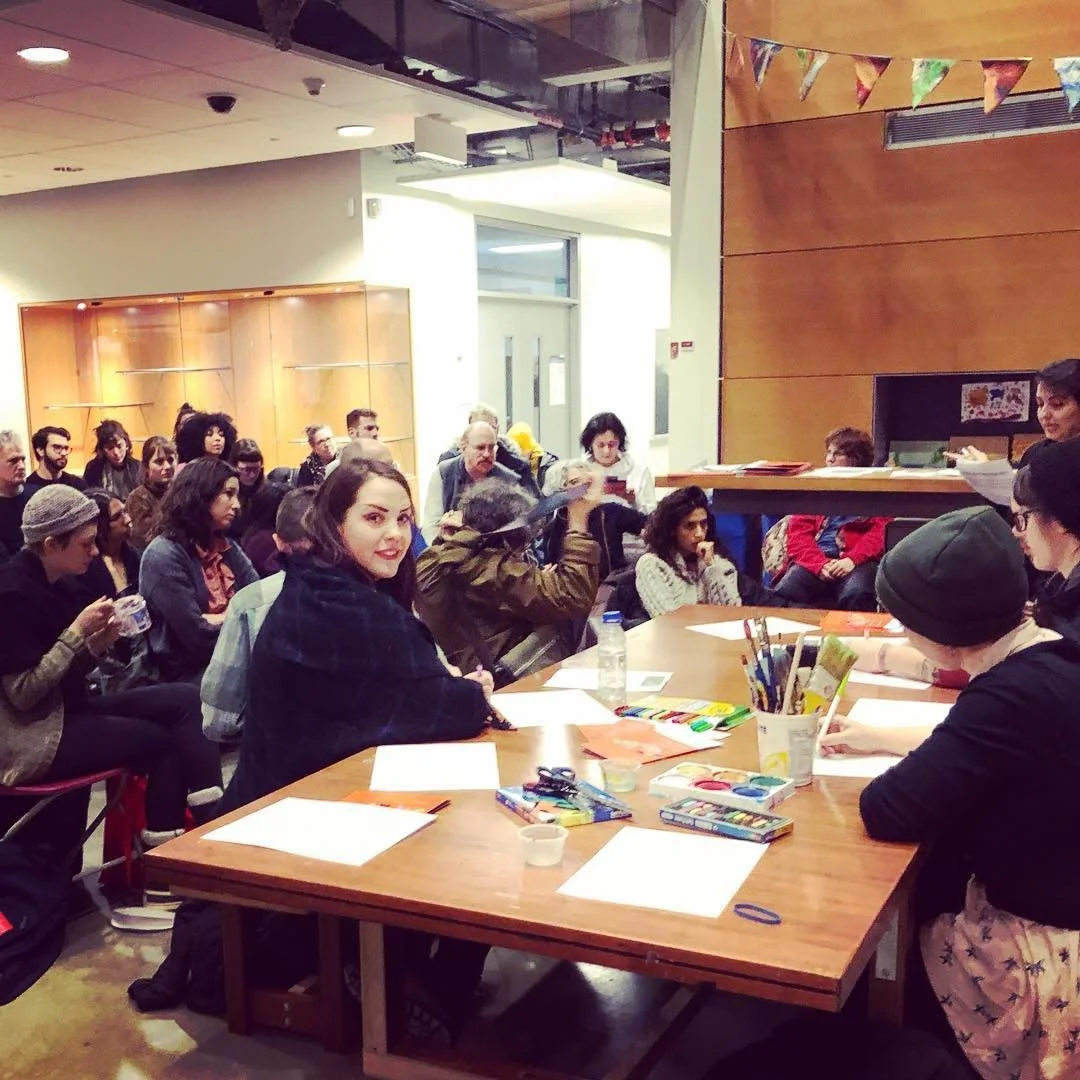
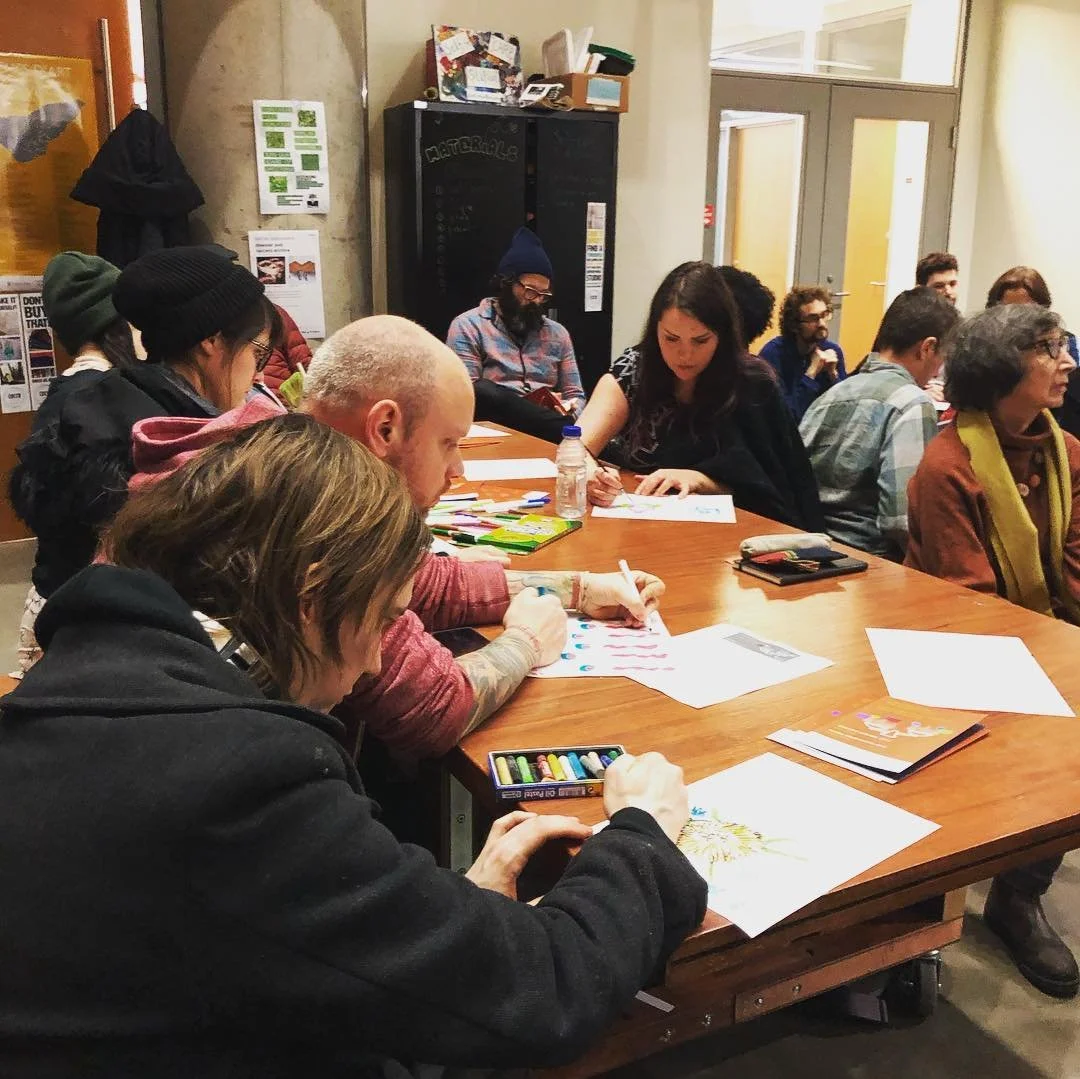
How could art meaningfully contribute to the social justice struggle?
Whose Art? Our Art!: How could art meaningfully contribute to social justice struggles?
Whose voices predominate in the arts? To what extent do these voices perpetuate a narrative of dominance or liberation? This public conversation looks at the emancipatory potential of art. What needs to be in place for art to truly be a site of resistance to violence, racism and economic oppression? In light of art as a commodity and art as a purported contributor to gentrification, how can we envision art as the community-building strategy it aims to be?
Guests:
Johnny El-Hage is a multidisciplinary artist and community organizer with academic background in Education Studies (MA), Human Resource Management (MHRM), Business Administration (BBA), and Communications Arts. He is the founder of 'Entreprise Culturelle Abjad Howse’ (2018) that nurtures Arabic arts in Canada in its diverse forms and empower the people who create and celebrate it to be active contributors towards a socially just multicultural Canadian society. His research focuses on constructing alternative spaces of representations that emerge in contrast to the dominant hegemonic culture in heterogeneous societies.
Salima Punjani is a multisensory social artist and graduate social work student based in Montreal, Quebec. Her recent projects include Progression, a multisensory installation exploring narratives of people living with multiple sclerosis, Konbit Anba Soley, an interactive documentary about a social movement in Cité Soleil, Haiti as well as Moms of Montreal, a photographic storytelling project that provides an intimate glimpse into the lives, recipes, and stories of different families in Montreal.
Jane Reväe McWhirter is a visual artist from Saskatoon, Saskatchewan, currently completing her Bachelor of Fine Arts in Studio Arts at Concordia University in Montreal. Exploring ideas of trauma, healing, femininity, nature and the occult. Jane creates as an outlet, channeling emotion into her work, creating a wide variety of fictionalized autobiographical work in many different mediums.
Jane has spent several years using art to promote personal growth, build community and help improve the lives of others. She’s worked with people from all backgrounds and of all ages but specializes in working with at-risk youth.
Moderator: Emma Haraké is a visual artist and educator who also collaborates on curatorial projects and events. She is currently pursuing her graduate studies in Concordia University's Art Education Department. Her research interests include autobiographical and arts-based inquiries, memory work, storytelling and oral history. Emma has worked extensively in the non-profit sector and locates her teaching within community-based practices.
University of the Streets
Since its inception in 2003, the University of the Streets Café has focused on creating welcoming spaces where diverse groups of citizens can gather to share their unique experiences and perspectives.
Flagship initiative
To date, we have organized over 400 public conversations in cafés and community spaces across Montreal. We believe that the simple act of talking with one another provides an incredible opportunity for growth, empowerment, community building and social change.
Our conversations are open to everyone. No experience is required — just a willingness to engage in meaningful dialogue. If needed, whisper translation can be arranged.
How it works
There is no need to register, simply show up! We recommend arriving a little early to get settled in and find a good seat before the conversation officially begins.
These conversations are a unique, participatory form of learning that values experience over expertise. Everyone, including the guest, is both a learner and an expert, bringing their own perspectives, thoughts and questions to the table. While speaking is encouraged, it is not required. If you do wish to share your ideas or thoughts, simply signal the moderator.
Thanks to the generous support of our volunteers, venues, partnering organizations and Concordia, all conversations are offered free of charge.
Methodology
A public conversation is much like a conversation you would have with friends or family around a dinner table, except with more people, more points of view and slightly more structure.
Check out their website for upcoming events, an archive and more